By Chris Kelly (@ccalciok)
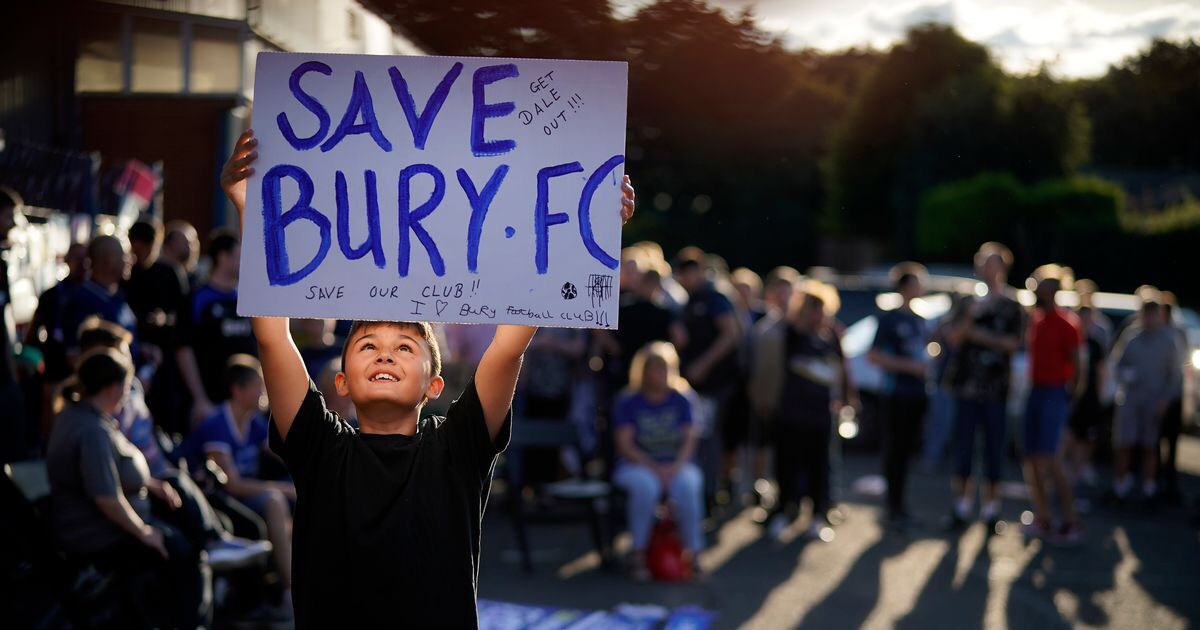
The 2019/20 English Football League season is now up and running, five games in and teams are starting to hit their stride. The season wont start for League One Bury however, who have devastatingly been expelled from the EFL.
Owner Steven Dale took charge of the club last year for £1. Since then Bury have been promoted and should have been looking forward to challenging themselves at a higher level. This has been far from the case as players and staff alike haven’t had their wages paid either on time, or in most cases – at all, while various companies and creditors have been left out of pocket through negligent ownership of the club.
Bury’s successful squad and management team have largely cancelled their contracts and gone on to pastures new. The club has been run into the ground and subjected to countless winding up orders, deadlines and sanctions.
None of this seemed to bother Steven Dale however, who remained unconcerned and disinterested by the demise of a historic, two time FA Cup winning football club he’d seemingly bought with the sole intention of making money out of, one way or another.
The situation reached a head as the club were given a deadline of midnight on 23rd August to find a buyer which could guarantee Bury’s financial future and allow the club to start playing fixtures. If this did not happen, the club would cease to exist. Unfortunately, even with an extended deadline of August 27th, the club could not be saved – Bury FC, founded in 1885, are no more.

The loyal supporters and people who care for the club are already talking of starting up afresh next season at the base of the English football pyramid, but at the same time, realistically, we could have seen the last of a wonderful, community driven football club.
At the same time, League One compatriots Bolton Wanderers are in dire straights financially too. Though they have managed to fulfill some fixtures, it has been with few senior players. Youth players aged between 16 and 19 have mainly took to the field as, like Bury, the wages to senior pros have been repeatedly unpaid, leading to players moving on or refusing to play.
Owner Ken Anderson has been accused of reckless ownership and dereliction of duty as club custodian. Again subject to countless winding up orders and sanctions, Anderson’s methods and decisions have regularly looked to be against the needs of the club, with conflicts of interest aplenty in regards to where and to whom club funds have been distributed.
Bolton are a footballing institution, one of the 12 founder members of the English game and in existence for 145 years. The club has numerous FA Cup victories to it’s name and was playing European football against the likes of Bayern Munich not too long ago. To see the club handled in this manner is difficult from the outside and must be heartbreaking for everyone with an attachment with to ‘The Trotters’.
Manager Phil Parkinson, who resigned recently, worked tirelessly to get a team on the field but with the welfare rules regarding under 18’s playing so many matches, the situation and future of Bolton Wanderers needs urgent attention and action before it reaches an unrecoverable level and they too are unable to meet fixture requirements. They have been issued with a deadline of midnight on September 12th to satisfy the authorities of their financial position, otherwise they too will face expulsion from the EFL.

Although clubs have sporadically gone to the wall in the past, financial insecurity appears to be becoming a regular occurrence now, in times when the game has such wealth by comparison to yesteryear; though unevenly spread wealth causes its own problems. Wages at the top level are growing more and more astronomical by the season and teams feel the need to spend more to compete. But if the revenue isn’t trickling down, owners and boardrooms can make hasty decisions in a gamble to keep apace with the competition.
Suffice to say that clubs first and foremost need to live within their means. They should be safeguarding their own future and form a plan that allows them to be as self sufficient as possible. This will not happen if you have the wrong people allowed to take charge and manoeuvre the club to their own ends.
The likes of Charlton, Leyton Orient, Macclesfield and recently relegated Notts County have all reached worrying levels of unacceptable ownership and financial sustainability in recent times and it’s a situation that needs urgent protocols put in place by all concerned, both internally and externally.
People being allowed control of football clubs when their morals, aspirations and way of thinking is clearly to the detriment of what the club requires or needs should be governed and evaluated far more thoroughly than it is currently. It requires effective, strong and responsible leadership from the game’s governing bodies, which puts the clubs’ viability and future at the heart of their decisions.
To the towns of Bury and Bolton (and everywhere else around the country), the football clubs are huge parts of the community, passed down from generation to generation. They are something that should be protected, providing a social outlet and a source of local, regional and national pride. From the pre-match routine of supporters to the nearby local businesses that rely on the custom, football, and it’s connections and ties, is a way of life. An emotional attachment which takes people away from their worries elsewhere.
English football has the best pyramid system in the world, it needs looking after, sustaining and regulating properly. The EFL, along with the FA (with more thoughtful assistance from the Premier League) need to put together a clear plan and structure before it is too late for any more football clubs. There’s many – and some obvious – options open to them to allow better transparency, ownership and financial infrastructure all round.
When a potential owner is involved in the purchase of a football club, they must pass a ‘fit and proper’ persons (buyer) assessment. It has become obvious that this ‘test’ is not fit for purpose, inept and without thorough investigation. There is no way an individual who has an awful track record of business failures, both within and outside of football, and no knowledge of the necessities involved should be handed the reigns to a community/national asset on a whim.
The Football Association and the EFL need to rectify this immediately. They need to take responsibility for their member clubs, the institutions that are the bedrock of our game and are their responsibility to help maintain and sustain. If this is not the case, then what is the role of the EFL? What is the aims of a governing body if it is not to oversee and guide its members and stakeholders?
Surely, with the money involved and invested in our game nowadays, an independent regulator needs to be set up to oversee the financial running of football clubs, with the objective of helping and ensuring clubs ‘cut their cloth’ accordingly to their situation, aswell as ensuring the correct individuals or groups are allowed to take charge of clubs; people that have the club’s interest at heart and are working in the club’s benefit.
The aforementioned regulator could have correspondence and links to football’s governing bodies, but remain independent, unattached and working with the sole aim of safeguarding the clubs’ financial future at whatever level they ply their trade.
A salary cap has been mentioned many times previously and would be an option to help clubs to stay within budgets and limit players and agents asking for over inflated wages and bonuses. With football being such a huge part of the history, heritage and culture throughout England, I find it surprising that football clubs over 100 years old are unable to claim the same stature as listed buildings, which would put off anybody looking to purchase a football club for nothing more than personal gain as the assets and land attributed to football clubs would not be available for sale on the say-so of one individual or company.

I think it’s fair to say there are ways the Premier League could do more too. As said previously, clubs need to live within their means first and foremost, but they are hampered in some ways by rules which blatantly favour the bigger clubs at the expense of the lower leagues. Clubs in non-league and the lower echelons of the football league set up academies, bring through talented players which are then hoovered up by the bigger clubs for miniscule amounts of compensation. Big clubs also regularly charge loan fees for their players to gain first team experience, which, with the money the top flight is engulfed with, seems a little unnecessary and self-serving. Ultimately many minor rules and loopholes are there for the good of the top teams, with little thought of the impact lower down the pyramid.
The football idealist in me recognised the Premier League were quick to reward Richard Scudamore with a £5m bonus upon his departure as CEO, yet squabble over allowing any of the incredulous finances they have to trickle down and support the game as a whole. This, along with a constantly nonchalant attitude from the top level towards the needs of those further down the ladder, leads to so many questions from lower league supporters and people who love the game as a whole. Does this seem appropriate? Do they care? Have they forgotten where they came from before the riches arrived? Is this the way the leaders of our national game should see things? For something to flourish and prosper at the top, surely the foundations need to be solid and well maintained aswell.
I fully understand looking at this from an emotional viewpoint is naive, but isn’t football an emotive sport? One who’s structure seems broken, unbalanced and increasingly based on greed. I think it’s fair to say an awful lot more could be done to protect it for future generations.
Many of the Premier League’s and England’s national teams biggest and most notable stars gained the necessary experience and development at lower league clubs, both adding to their quality and value, and I’m sure the top clubs would like that relationship to continue. We have a vast amount of resources in the game in this country, but it’s set up on a very top heavy basis at the moment and for the game to flourish for everyone, this needs balancing up a little.
In terms of helping the governance of club ownerships, perhaps English football could implement the ’50+1′ rule which was set up to protect German football. This allows clubs to have 51% fan/club stakeholding, meaning no club can fall under the control of unscrupulous individuals or commercial enterprises. It is a law which puts the clubs first before any personal interests and motives, protecting their future and allowing natural growth and progression. This is the kind of forethought needed from the FA and the EFL if we are to believe they’re acting for their member clubs and not for individual/corporate gain.
The organisations that control our game seem very reactive rather than proactive in terms of taking actions and providing guidelines that help our game progress. However they are quick to remove areas of the game from their traditional standing, taking the League Cup draws to various parts of the world to be done and trying to cater for an overseas market/sponsor to the detriment of the fans at home.
Many people feel the EFL requires a complete reform. It certainly needs to readress it aims, purpose and structure. Ultimately, the governing body for the 72 (now 71) football league teams needs to look out for and act in the interests of it’s clubs more. It needs an understanding of what these clubs mean, from both a practical and emotive standpoint, and need from a more proactive setup, one which isn’t controlled by and dictated to by the Premier League. The EFL need to take responsibility, be firm but helpful and put in place some accountability measures in terms of the financial control and ownership of it’s member clubs.
One club lost is one too many, shameful for English football at every juncture . Lessons need to be learned quickly to protect more clubs and communities from a very bleak future.
Featured image courtesy of Manchester Evening News.
By Chris Kelly (@ccalciok)
 BehindClosedDoors